
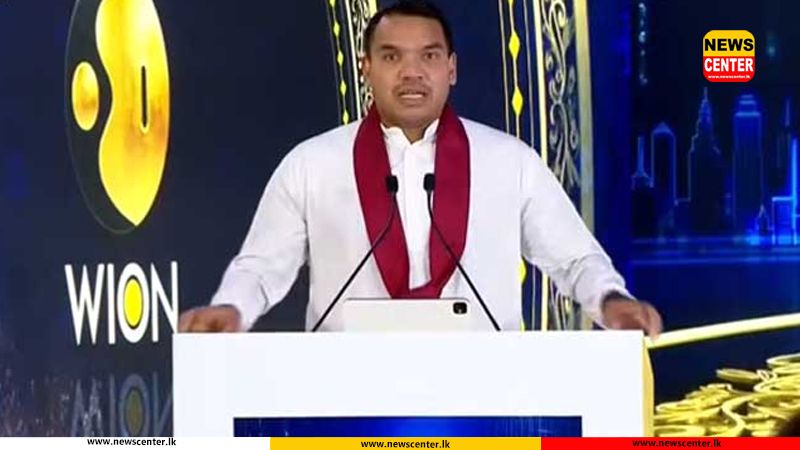
Sri Lankan MP Namal Rajapaksa, speaking at WION’s World Pulse summit on Wednesday (Mar 18), said the global system is undergoing a major transformation, adding that “global institutions are being tested like never before.”
Speaking on the importance of the Indian Ocean in the global economic setting, he said it was never “a zone of conflict; it was a bridge between civilisations.”
It “connected societies rather than dividing them”, he said, adding that now, the “Indian Ocean has become one of the most important economic highways in the world”. He added that “Located at the centre of sea routes, Sri Lanka holds one of the most strategic positions in the Indian Ocean.”
Rajapaksa lauds India-Sri Lanka ties
During his keynote address at the summit, Namal Rajapaksa, the son of former Sri Lanka PM Mahinda Rajapaksa, mentioned the centuries-old relationship between India and Sri Lanka. “More than 2,000 years ago, the teachings of Lord Buddha travelled from India to Sri Lanka. That journey was not just spread of philosophy. It was the beginning of a deep civilizational relationship that still shapes our society today. Trade routes link our ports. Cultural exchange shaped our traditions. And over centuries, our people built a relationship that remains one of the strongest in the Indian Ocean region.”
War upon our shores
Referring to the Indian Ocean as “one of the most important economic highways in the world”, Rajapaksa stated that “when these highways are threatened, the consequences are felt across the entire globe.”
The former Sri Lanka Minister of Youth and Sports said that recent global events remind us how fragile this stability can be. He said that “tensions in the Middle East continue to influence energy markets and global security,” and insisted that “stability of the Indian Ocean has become critical”. He warned that with turbulence rocking the global community, “war has reached our shore as well”.
“The ocean has shaped our past and will shape our future…it is the responsibility of our generation,” stated the Sri Lankan Member of Parliament.
India’s rise and New Delhi’s role as a stabilising force in the Indian Ocean
The Sri Lankan MP said India’s rise is among the most significant shifts of the 21st century. “India’s economic growth, technological innovation, and demographic strength are reshaping the Indian Pacific region,” he said. Rajapaksa added that under Prime Minister Narendra Modi, “India is emerging not only as a major economic power, but also as a stabilising force in the Indian Ocean.”
He also participated in a question-and-answer round with WION anchor Mohammed Saleh. Take a look:
WION: The war in the Middle East, which has now entered its 18th day, is already having global consequences. One incident that stood out was the US torpedoing of an Iranian warship just 40 nautical miles off Sri Lanka’s coast. How did Sri Lanka view an incident of this scale happening so close to its shores?
Namal Rajapaksa: Sri Lanka was one of those countries who promoted, who initiated the non-aligned movement at that time, and also who was a very advocate of it. We strongly believe that the Indian Ocean must remain a zone of peace and non-conflict. So it was disturbing to know that the war has reached our shores as well, starting from the Gulf to the Indian Ocean.
So I think this is where the Indian Ocean nations must work together. And I believe one way forward, out of many options that we have, is going to be the Colombo Security Conclave that was initiated in 2011. And the Secretariat must be established, and maritime domain awareness is something that is very important at this given stage as a region.
And I think the impact is all over the place. I mean, it’s not only to Sri Lanka, but one fact that we also must keep in mind that there’s a precedent now. So the war, technology, military advancement is not only with the governments in today’s context.
And if you recall, we have gone through a war for 30 years and LTTE had submersibles at that time, and they had two torpedoes as well. And one was recovered, and one was tested apparently, and one was recovered. It’s in the Trincomalee Naval Base.
So you see different organisations with military technology. So a precedent in the Indian Ocean, it’s alarming and it’s something I personally believe that the region must take it very seriously and to make sure things like that doesn’t happen in the future.
WION: The closure of the Strait of Hormuz can plunge the global economy into a recession. Sri Lanka depends on the Strait for about 37 per cent of its crude. What is your contingency plan?
Namal Rajapaksa: It’s not a single challenge only to Sri Lanka but for the region as well. Our government is engaging with various stakeholders, various partners, and also with India as well to make sure that our supply chains keep intact. And I think it is high time that they have a long-term strategy and this is something that we would have thought 20 years ago about completing the fuel tanks that we have, and also looking for renewable energy sources to be expanded in Sri Lanka. But unfortunately, as you know, in subcontinent, certain domestic politics keeps on changing, the policies keep on changing.
But I think at the moment, it’s about engaging and making sure that the nations that can influence for a peaceful settlement must engage aggressively to make sure that the conflict at least go on hold for a period of time and then countries like us must make sure that we engage with our friendly neighbors and friendly partners to make sure that the supply chain continues.
WION: Coming to Sri Lanka’s internal situation. 2022, it’s not a year that people in Sri Lanka will forget. There was what was called the Sri Lankan revolution or the struggle of the Sri Lankan people to overcome the economic hardships. They were unhappy with the government that was there at that moment. Now, you’re from this very prominent Sri Lankan family that was in power at that moment. How defining do you think that year 2022 was?
Namal Rajapaksa: Well, see, 2022 crisis, it did not happen in isolation. It was a series of incidents that took place from 2015. And if you recall, we had Easter [terror] attacks in 2019-18.
And then we went through COVID, and 80 countries like Sri Lanka were suffering from the impact that happened from the COVID. And as you know, Sri Lanka is heavily depending on foreign remittance and tourism. So, and top of that, as you know, there are many claims and allegations by the US government itself, the President Trump itself regarding regime change in our part of the world and how the USAID funded.
So taking all these into consideration, I believe it’s moving forward. It’s about planning for a longer term, especially to make sure that our energy security is maintained and our food security is maintained. And I think after 2022, all political parties in Sri Lanka started redefining themselves, rethinking themselves and realigning themselves into the modern context because you see there is a rapid change in the voting pattern as well.
So it’s a question whether we are actually keeping up with the modern demands of the modern society, or are we following the traditional pathway of development and infrastructure?
WION: A final question, you are also a rugby player, which is unusual for a politician. How did that begin?
Namal Rajapaksa: My father’s family is into politics, and we are a dynastical political family from that end. But from my mother’s side, my great-grandfather was in the Royal Navy and they all played rugby at that time for Ceylon. So from him to my mother’s two brothers, they are two children and my two brothers.
So altogether we are about seven in the family from my great-grandfather, from my mother’s side who has played, represented Ceylon or Sri Lankan rugby, including myself. So for some reason when I was ten years old, I took my second brother to play rugby. Then when he saw everyone was too big, because he was nine years and I was ten years and the rest of the people were all 15, 16 years.
So one of us had to remain there. So then I decided, okay, let me go and start first and see how it goes. And well, it took me to the national level and my two brothers also played for Sri Lanka and I played for Uni in UK as well.
So it’s something very close to my heart. And I think someone has to do something different, right? So I think we decided to choose rugby over cricket.”
Sri Lankan MP Namal Rajapaksa, speaking at WION’s World Pulse summit on Wednesday (Mar 18), said the global system is...
Mar 18, 2026
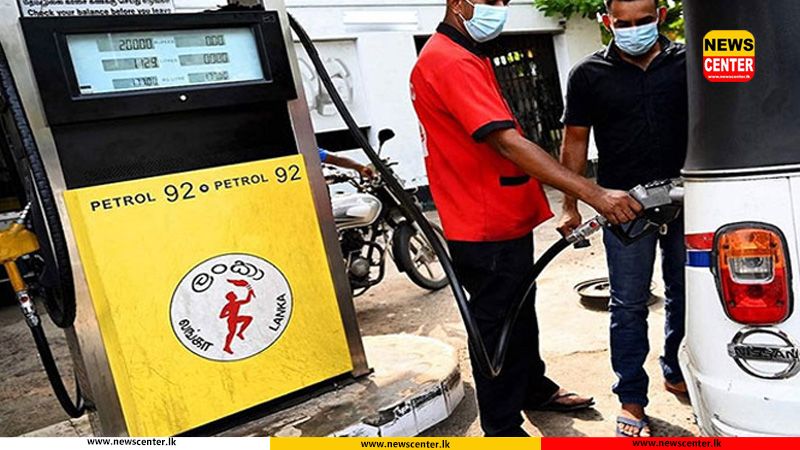
Owners of vehicles will be allowed to purchase fuel under an odd–even number plate system from today (19), according to...
Mar 18, 2026
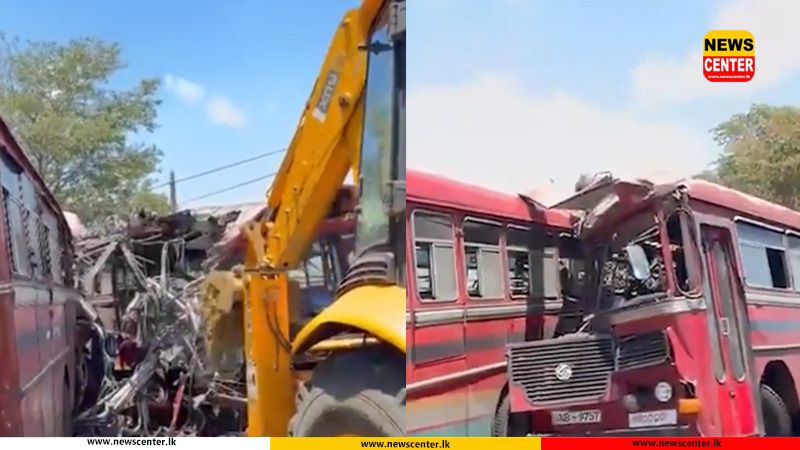
At least four individuals have been killed in a head-on collision involving two buses along the Ambalantota–Kataragama road in Weerawila,...
FeaturedMar 18, 2026
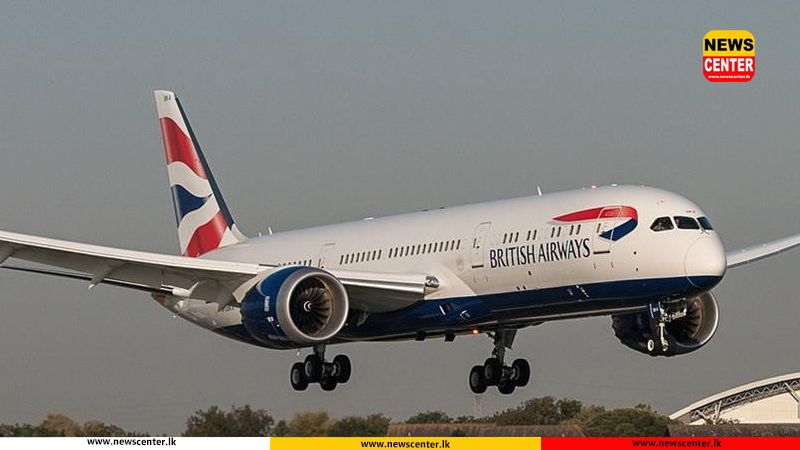
British Airways has announced that it will resume flights to Colombo in October. British Airways said from October 23, 2026,...
Mar 18, 2026
The government has decided to grant a weekly holiday to public sector employees every Wednesday starting today (18), until further...
FeaturedMar 18, 2026
Showers or thundershowers will occur at several places in the most parts of the island after 2.00 p.m., the Department...
Mar 18, 2026
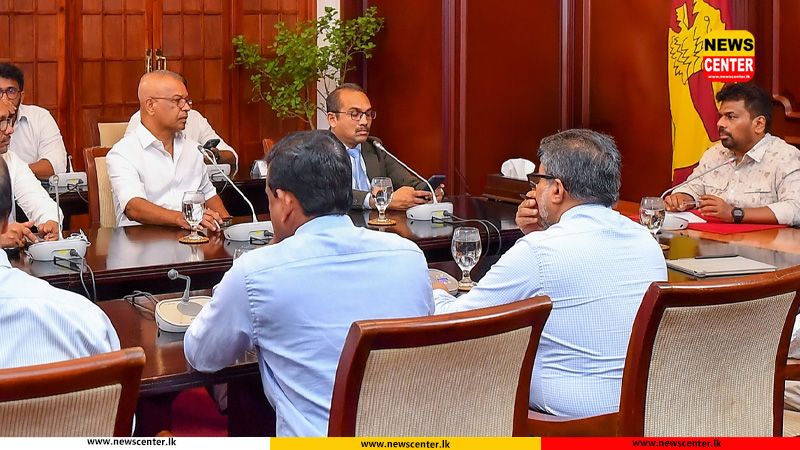
President Anura Kumara Dissanayake emphasised that each Ministry must have a practical plan in place for fuel conservation, noting that...
Mar 17, 2026