
LIVE UPDATES: 2026 Budget Speech
Nov 7, 2025
2026 Budget Second Reading Debate Begins
The parliamentary session commenced at 9:30 am today (08) under the patronage of Speaker Dr. Jagath Wickramaratne.
Accordingly, the second reading debate on the 2026 budget will commence from today (08).
The Parliamentary Communications Department said that the second reading vote on the budget will be held on Friday, November 14 at 6 pm.
The third reading of the budget, or committee stage debate, will be held for 17 days from November 15, and the third reading vote on the budget will be held on December 5 at 6 pm.
The Parliamentary Communications Department said that the budget debate is scheduled to be held every day during the budget period, except for public holidays and Sundays.
The 2026 budget was presented to Parliament by President Anura Kumara Dissanayake yesterday (07) afternoon.
It is noteworthy that the President presented the budget proposals for over 4 hours.
2026 Budget Debate to begin today
The debate on the Second Reading of the Appropriation Bill for the year 2026 is scheduled to commence today (08) and will continue for six days, until November 14.
Thereafter, the vote on the Second Reading of the Budget will be taken on November 14 at 6.00 p.m., according to the Department of Communication of Parliament.
Subsequently, the Committee Stage debate on the Appropriation Bill for the year 2026 is scheduled to be held for 17 days, including three Saturdays, from November 15 to December 5.
Following that, the vote on the Third Reading of the Appropriation Bill will be held on December 5 at 6.00 p.m.
Accordingly, the entire Budget debate is scheduled to be held from November 8 to December 5, 2025.
The Second Reading of the Appropriation Bill for the year 2026 (the Budget Speech) was presented to Parliament yesterday (07) by President Anura Kumara Dissanayake in his capacity as the Minister of Finance.
At around 1.30 p.m. yesterday, in keeping with tradition, the President arrived at the Chamber from the Office of the President within the Parliament premises, preceded by the Serjeant-at-Arms.
Subsequently, the Budget proposals were presented until 5.50 p.m.
2026 Budget Sparks Debate: Cross-Party Reactions from Parliamentarians
Sajith Premadasa -Leader of the Opposition
Deputy Minister Namal Karunarathna, Minister Ananda Vijayapala, Minister Nalinda Jayathissa and Dep Minister Rathna Gamage
MP Chamara Sampath
MP Harsha de Silva and MP Kabir Hashim
Sri Lanka's 2026 Budget: Focus on Public Sector Benefits, Housing, and Tax Reform

COLOMBO, SRI LANKA — The 2026 Budget, presented by President Anura Kumara Dissanayake, outlined significant proposals targeting public sector welfare, housing development, and major tax policy changes aimed at boosting government revenue and compliance.
The President reiterated the government's commitment to reducing the budget deficit to 5.2% and public debt to 87% of GDP by 2030, while emphasizing that there should be no doubt about the country's economic stability.
Public Sector Welfare and Benefits
Welfare for government employees saw notable boosts:
- Salary Increase: Rs 110 billion has been allocated to implement the second stage of the public sector salary revisions initiated in 2025. This increase will be paid to all government employees starting with their January 2026 salary.
- Property Loan Scheme: The Government Employees’ Property Loan Scheme will be reactivated, allowing loans up to Rs 5 million.
- A 4% interest subsidy will be given for the first Rs 3 million.
- A 2% interest subsidy will be given for the amount between Rs 3 million and Rs 5 million. (Rs 500 million allocated).
- Festival Advance: The interest-free festival advance for government employees will be increased from Rs 10,000 to Rs 15,000.
- Recruitment: Approval has been granted to recruit nearly 75,000 individuals to the public service under a proper methodology.
Housing and Social Security
A major focus was placed on addressing housing shortages across vulnerable communities:
- "Thamanngema Thanuk - Lassana Jeevithayak" (Own Place - Beautiful Life) Housing: A medium-term target of 70,000 houses is planned under this phased program. Rs 3,000 million is allocated in addition to the already assigned Rs 7,200 million for the construction of 10,000 houses in 2026.
- Urban Renewal: Rs 15,000 million is allocated for 2026 for the Urban Regeneration Project in designated "urban estate" areas of Colombo, including Applewatta, Madampitiya, and Torrington Place.
- War-Affected Families: The allocation for constructing 2,500 houses for families without homes due to the war in the North and East is increased from Rs 3,850 million to Rs 5,000 million.
- Estate Community Housing: Rs 4,290 million is allocated with Indian government support to build 2,000 houses and improve infrastructure for the Malayagam (Estate) community in Central, Uva, Sabaragamuwa, North Western, and Southern provinces.
- Vulnerable Children/Families: Rs 2,000 million is allocated to provide a financial grant of Rs 2 million for land purchase, new home construction, or renovation for youth leaving children's homes and at-risk families identified by the National Child Protection Authority.
Tax and Revenue Policy Changes
- Tax Base Expansion: The annual turnover limit for compulsory registration under VAT and SSCL (Social Security Contribution Levy) will be lowered from Rs 60 million to Rs 36 million, effective April 1, 2026.
- SSCL on Vehicles: The SSCL on vehicle sales, which was inconsistently collected, will be charged at the point of import or manufacturing and exempted at subsequent sales. This is effective from April 2026.
- Customs Tariffs: The current 0%, 15%, 20% tariff structure will be replaced by a national tariff policy featuring 0%, 10%, 20%, 30% rates, effective April 2026.
- Imported Textiles: The Cess tax on imported textiles will be removed and replaced with Value Added Tax (VAT), effective April 1, 2026.
Infrastructure and Development
- Port City Highway Feasibility: Rs 330 million is allocated for a feasibility study to connect the elevated Port Access Expressway from the Port City end to the Marine Drive, as a strategy to mitigate expected traffic congestion near the Lotus Roundabout.
- Local Government: Rs 2,500 million is allocated to strengthen local government authorities, improve infrastructure, and support revenue generation programs.
Education and Foreign Employment Benefits
- Principal Allowance: The allowance for working principals will be increased by Rs 1,500 to recognize their administrative accountability. Rs 1,000 million is allocated for this and for improving educational targets.
- Difficult Area Teacher Allowance: The allowance paid to teachers in difficult areas, which hasn't been increased in 20 years, will be increased by Rs 1,500 to motivate them.
- Foreign Workers Pension: A contributory pension scheme and a concessionary housing loan scheme are proposed for Sri Lankan expatriate workers.
75,000 for public service
The President says that the public service mechanism has been completely paralyzed due to the lack of formal recruitment for vacancies in the public service for many years.
The President said this while presenting the budget proposals.
Therefore, after a formal study conducted by the Committee to Review the Recruitment Process and Manage the Number of Employees in the Public Service, established under the chairmanship of the Prime Minister, approval has been given to recruit nearly 75,000 people under a proper methodology.
This includes positions such as technical officers, law enforcement officers, and revenue officers who are required to maintain essential public services.
Also, the President said that from now on, all recruitments, promotions, and other tasks in the public sector will be carried out only in accordance with the prescribed examinations and service regulations, free from political interference.
Housing loans at concessional interest rates for Sri Lankans abroad
A subsidized housing loan scheme for overseas workers has been proposed in this year's budget.
It is noteworthy that the main source of foreign remittances to the country is Sri Lankans who are abroad.
This housing loan scheme has been proposed for overseas workers in appreciation of their contribution to the development of our country.
It has been proposed to be implemented using the funds of the Sri Lanka Foreign Employment Agency according to the interest reimbursement method.
A contributory pension scheme is also to be introduced for overseas workers, and the Ministry of Foreign Employment is carrying out the necessary work to implement it by 2026 with the initial work being carried out quickly.
The President said in presenting the budget proposals that Rs. 2,000 million will be allocated from the funds of the Foreign Employment Agency in the initial phase for these programs.
Rs. 100 million from this year's budget for street dogs and pets
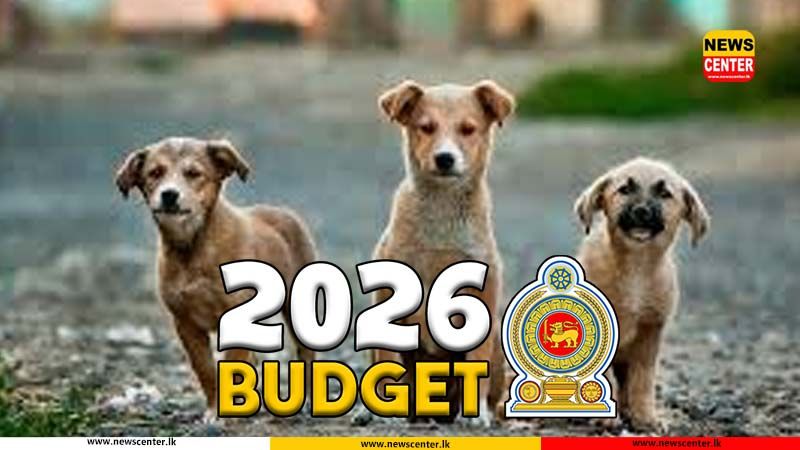
With the changing lifestyles in urban and peri-urban areas, the trend of keeping pets is growing rapidly.
Along with this, the President said while presenting the budget proposals that the burial and cremation of pets when they die has become a problem.
There has also been an increase in demand for respectful and environmentally responsible alternatives.
It has also been noted that a system for caring for stray dogs and pets prevalent in urban areas needs to be developed in collaboration with local governments.
In order to address this need, it has been proposed to allocate Rs. 100 million to implement a pilot project in the Kesbewa and Piliyandala local governments with the aim of encouraging the burial, cremation and provision of services for the care of stray animals.
Education gets its share of the budget - Mahapola allowance also increases
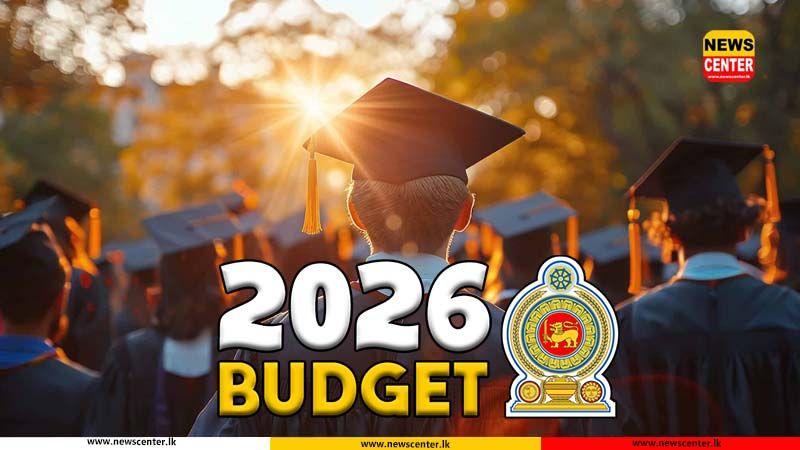
The government has proposed in this year's budget to continue the stationery allowance of Rs. 6,000 provided to students from 2025 until 2026.
Rs. 9,000 million has been allocated for this through the Aswesuma program.
Meanwhile, Rs. 50 million has been proposed in the budget to provide a monthly allowance of Rs. 5,000 per child for disabled children from low-income families based on medical recommendations.
Meanwhile, even though the number of students enrolled in universities has increased to 43,000, the lack of adequate facilities is a serious problem, so a provision of Rs. 2,500 million has been allocated to develop student hostels, canteens and common learning areas.
Meanwhile, despite the establishment of medical faculties, many problems have arisen due to the lack of professorial units and laboratory facilities required for quality medical education. For this reason, a provision of Rs. 11,000 million has been proposed for the development of medical faculties including Sabaragamuwa, Moratuwa, Ruhuna, Uva Wellassa and Eastern Universities.
In addition, a provision of Rs. 11,500 million has been allocated for improving the facilities of universities and higher education institutions and for research activities.
Meanwhile, it has been proposed to increase the Mahapola and scholarship allowance provided to university students by Rs. 2,500 in 2026 to match the cost of living. Accordingly, the monthly allowance will be Rs. 10,000. Accordingly, the scholarship allowance will be increased to Rs. 9,000. In parallel, the Skilled Student Encouragement Allowance will be increased by Rs. 2,500.
With the aim of encouraging students with disabilities studying in higher education institutions, it is proposed to allocate Rs. 50 million to provide a monthly allowance of Rs. 5,000 to students from low-income families.
It is proposed to increase the allowance paid to National College of Education scholarship recipients by Rs. 2,500. In addition to the amount currently allocated, it is proposed to allocate another Rs. 2,750 million to pay the increased allowance.
Rs. 1,500 million is allocated from the budget for the construction of hostel buildings in selected universities, especially in universities such as South East, Jaffna (Kilinochchi), Vavuniya, East and Sabaragamuwa. Provisions have also been made in this year's budget for the renovation of hostel buildings that have not been properly maintained due to the financial crisis in the country. In future, more attention will be paid to using the building facilities of the surrounding community in providing hostel facilities for university students.
It is expected that the quality of vocational education and the availability of decent employment opportunities will be improved through the upcoming education reforms.
Accordingly, activities such as improving the facilities of vocational training centers, modernizing subject courses, and training teachers and instructors will continue.
Upgrading 9 vocational education and vocational training centers as Centers of Excellence and upgrading 50 training centers across the island will commence in 2026. For this, Rs. 8,000 million has been allocated for the improvement of overall vocational training education, including Rs. 2,000 million.
President Dissanayake Unveils 2026 Budget Focusing on Digital Economy, Debt Reduction, and Social Welfare
COLOMBO, SRI LANKA — The following are additional key proposals presented by President Anura Kumara Dissanayake in the 2026 Budget Speech today (07), covering public sector welfare, housing initiatives, tax changes, and infrastructure development.
Public Sector Welfare and Benefits
- Public Sector Salary Hike (Phase 2): Rs 110 billion is allocated to implement the second phase of the salary revisions introduced for the public sector in 2025. This salary payment will be made to all public sector employees starting from the January 2026 salary.
- Property Loan Scheme: The existing property loan scheme for government employees will be reactivated under a new structure, allowing loans up to Rs 5 million. Rs 500 million is allocated to provide an interest subsidy of 4% for the first Rs 3 million and a 2% subsidy for the amount between Rs 3 million and Rs 5 million.
- Festival Advance Increase: The interest-free festival advance given to government employees will be increased from Rs 10,000 to Rs 15,000.
- Gatekeepers' Allowance: The allowance paid to gatekeepers serving at unprotected railway crossings will be increased to Rs 15,000, with Rs 250 million allocated.
- Principal Allowance: The Principal's allowance will be increased by Rs 1,500 as an appreciation of administrative responsibilities in achieving educational goals, with Rs 1,000 million allocated to support educational targets.
- Teacher Allowance (Difficult Areas): The allowance paid to teachers serving in difficult areas will be increased by Rs 1,500 to motivate them, as this allowance has not been revised in 20 years.
- Vehicle Purchases: Rs 12,500 million is initially allocated for the purchase of essential vehicles for government institutions and vehicles/machinery for Parliamentarians, which must be returned upon the expiry of their term.
- Recruitment: Approval has been granted to recruit nearly 75,000 individuals to the public service under proper procedure.
Tax and Revenue Policy Changes
- Social Security Contribution Levy (SSCL) on Vehicles: Due to observed irregularities in collecting the SSCL on vehicle sales, it is proposed that the tax be charged at the point of import or manufacture, and exempted during subsequent sales (re-selling). This will be implemented from April 2026.
- VAT/SSCL Registration Threshold: To broaden the tax base, the annual turnover threshold for registration for VAT (Value Added Tax) and SSCL will be reduced from Rs 60 million to Rs 36 million, effective from April 1, 2026.
- Customs Duty Rationalization: The existing 0%, 15%, and 20% Customs Duty rates will be adjusted to 0%, 10%, 20%, and 30% under a National Customs Tariff Policy, effective from April 2026.
- Textile Tax: It is proposed to remove the Cess tax on imported textiles and replace it with a Value Added Tax (VAT), effective from April 1, 2026.
Housing and Infrastructure
- Northern/Eastern Housing: The allocation for constructing 2,500 houses for families without homes due to the war in the Northern and Eastern Provinces will be increased from Rs 3,850 million to Rs 5,000 million.
- Plantation Community Housing: Rs 4,290 million is allocated with the assistance of the Indian government to construct 2,000 houses and improve infrastructure for the plantation community in Central, Uva, Sabaragamuwa, North-Western, and Southern Provinces. Rs 1,305 million is also allocated to complete 943 ongoing houses in the Northern and Southern Provinces with Indian aid.
- Urban Regeneration: Rs 15,000 million is allocated for 2026 for the Urban Regeneration Project in identified underserved settlements (urban estates) in Colombo and suburbs (including Applewatte, Madampitiya, Ferguson Road, Obeysekarapura, Stadiumgama, Colombage Mawatha, and Torrington Place).
- "Thaman Gemah Thenak - Lassana Jeewithayak" Housing: A new phased housing program targeting 70,000 houses in the medium term will commence next year. An additional Rs 3,000 million is allocated on top of the existing Rs 7,200 million for the construction of 10,000 houses in 2026.
- Vulnerable Children/Youth Housing: Rs 2,000 million is allocated to provide a Rs 2 million financial grant for youth transitioning out of child detention homes and families of vulnerable children identified by the National Child Protection Authority, to purchase land and build a house, build on existing land, or renovate an existing house.
- Port Access Highway Study: Rs 330 million is allocated for a feasibility study to connect the Port Access Elevated Highway (Port City end) to the Marine Drive, aiming to mitigate expected traffic congestion near the Lotus Roundabout and adjacent areas.
Miscellaneous
- Pet Care: Rs 100 million is allocated for a pilot project in Kesbewa and Piliyandala local government areas to encourage services for pet burial, cremation, and the care of street animals.
COLOMBO, SRI LANKA — President Anura Kumara Dissanayake, in his capacity as Minister of Finance, Planning, and Economic Development, presented the 2026 Budget Speech to Parliament today (07). The President began by asserting that "no one should have doubts about economic stability," outlining ambitious targets for the coming year and stating that the government expects to reduce the public debt to 87% of the GDP by 2030.
Economic & Fiscal Strategy
- Debt Reduction: Government expects to reduce the public debt to 87% of GDP by the year 2030.
- Budget Deficit: The budget deficit will be reduced to 5.2%.
- Financial Strategy: The government’s financial strategy is to "forecast instability" and manage risks proactively.
- Social Security: A review of the social security program is planned for 2026.
- Borrowing Limit: The maximum limit for domestic and foreign borrowing for 2026 will be Rs 3,800 billion.
Governance, Corruption, and Tax Reform
- Legislation: The State Assets Act is planned for enactment in 2026.
- Judiciary: A Code of Ethics for judicial officers is planned for 2026.
- Digital Asset Disclosure: A digital system for the declaration of assets by all officials will be implemented.
- Tax Reform: Steps will be taken to amend the Strategic Development Act and the Port City Act to establish a new system for granting tax concessions.
- Tax Efficiency: The SVAT will be abolished, and steps will be taken to streamline the tax refund mechanism.
Public Service and Worker Welfare (NEW & UPDATED)
- Estate Workers' Wages (NEW): It is proposed to increase the minimum daily wage of estate workers from Rs 1,350 to Rs 1,550 starting from January 2026. Additionally, a Rs 200 daily attendance allowance will be provided by the government, with Rs 5,000 million allocated for this purpose.
- Public Sector Salaries: Rs 110 billion has been allocated to implement the second phase of the salary revisions enacted for the public sector in 2025. This payment will commence with the January 2026 salary.
- Disability Quota: A 3% quota is proposed for recruiting individuals from the disabled community into government service.
Digital Transformation and Infrastructure
- Digital ID: The first Digital ID card is expected to be issued in the first quarter of 2026.
- Public Service Fees: No public service fees will be charged for public transactions conducted through digital systems.
- Digital Economy Council: A Digital Economy Council will be established to boost the digital economy.
- Cashless: All government payments will be moved online to promote a cashless society.
- Land Records: Rs 100 million is allocated for a central digital system containing land information.
- Tax Incentives: Five-year tax concessions are proposed for Digital Communication Towers and incentives for establishing AI Data Centers.
- BIA Expansion: The suspended development project for the expansion of the Bandaranaike International Airport (BIA) will restart in the first quarter of next year.
- SriLankan Airlines: Steps will be taken for the debt restructuring of SriLankan Airlines.
- Beira Lake: Rs 2,500 million is allocated to develop Beira Lake into an attractive site in Colombo.
- Prisons: Rs 100 million is allocated for the efficiency of the prison system and open prison camps.
Investment, Education, and Health
- Foreign Investment: A residential visa scheme will be introduced for foreign investors.
- Investment Zones: An additional Rs 1,000 million is allocated for establishing Service Zones near Investment Zones.
- New Investment Zones: Two new technological investment zones are proposed for Nuwara Eliya and Digana via the Board of Investment (BOI).
- Mahapola Stipend: The monthly Mahapola stipend will be increased by Rs 2,500, bringing the total monthly allowance to Rs 10,000 starting January 2026.
- Student Relief: The Rs 6,000 allowance for schoolchildren to buy books will continue in 2026.
- Higher Education Support: A monthly allowance of Rs 5,000 is proposed for children from low-income families pursuing higher education.
- Medical Faculties: Rs 11,000 million is proposed for the development of medical faculties.
- National Heart Unit: Rs 200 million is allocated for the initial work on a 16-story National Cardiac Unit (total project cost Rs 12,000 million).
- Drug Eradication: Rs 2,000 million is allocated for the National Operation to eradicate the drug menace.
- Disability Support: Rs 500 million is allocated for day care centers for children with disabilities, including autism.
- Clean Sri Lanka: Rs 6,500 million is allocated for the Clean Sri Lanka Program.
- Aswesuma Support: Broadband internet vouchers are proposed for children of Aswesuma beneficiary families.