

{{youtube:https:kcnZeZojA7o}}
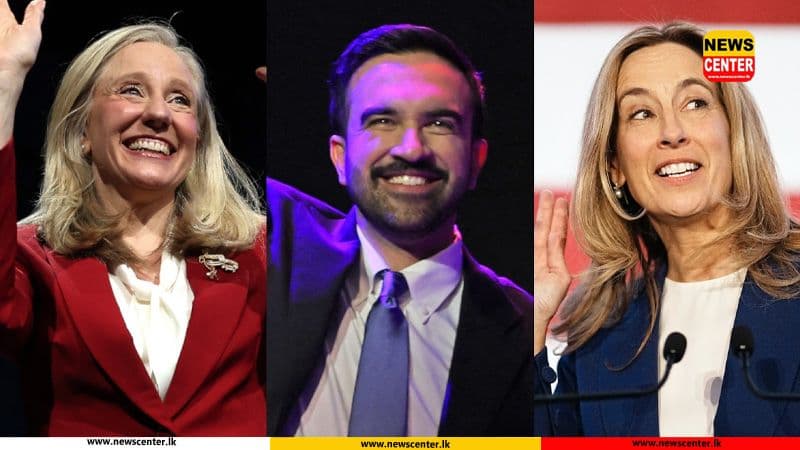
WASHINGTON D.C. — Following decisive victories in the New York mayoral race and crucial gubernatorial elections in Virginia and New Jersey, the Democratic Party is celebrating a major win, marking a dramatic shift from the sobering defeat experienced in last year’s presidential election.
The results provide the first major test of the political climate a year out from the vital 2026 midterm elections. Here is what we have learned from the sweep:
The Democrats scored key victories, sweeping the first major elections since President Donald Trump’s second term began. The mood was one of joyous celebration, a stark contrast to the despair following the party's bruising 2024 defeat.
Barack Obama's former deputy national security adviser, Ben Rhodes, noted that Mamdani "changed the electorate" by mobilizing young people and immigrants.
These strong results are a significant boost for the party, which has struggled to counter President Trump's second-term agenda. Democratic National Committee (DNC) Chair Ken Martin declared: "The Democrats are back and we're winning. We've got the momentum going into the midterm elections."
The core of Zohran Mamdani's left-wing campaign was a pledge to tackle the cost of rent, food, and childcare. Critically, this focus on affordability proved to be a winning issue for the more moderate Democrats in the gubernatorial races as well. Both Sherrill (NJ) and Spanberger (VA) placed the high cost of living at the forefront of their campaigns.
This powerful message gives the Democratic Party a unifying theme heading into the 2026 midterms, posing a potential challenge to Republicans. As political communications expert Andrew Koneschusky stated, "It's clearer than ever that affordability needs to be the centerpiece of the Democrats' message... The affordability message cuts across demographics and highlights a major vulnerability for Republicans."
The 2024 presidential election saw Donald Trump secure a huge 14 percentage-point increase in support from Latino voters compared to 2020. However, Tuesday night offered concerning signals for the Republican Party regarding this demographic:
Republican political consultant Mike Madrid suggested that the cost of living and economic messaging again played a pivotal role in this shift, noting, "No poll taken anywhere in the country in the past month has anything other than the economy as the top issue for Latinos."
The election night illustrated the broad ideological spectrum within the Democratic Party:
Experts like Koneschusky suggest the key takeaway is that Democrats must field candidates who reflect their specific electorate, arguing against a "one-size-fits-all" approach. This successful, multi-faceted approach raises critical questions about how the party will navigate candidate selection in future primary processes. (NewsCenter)

Ousted Bangladesh Prime Minister Sheikh Hasina on Monday delivered her first reaction to the death sentence handed to her by...
Featured16 days ago

An earthquake with a preliminary magnitude of 5.2 rattled parts of Cyprus on Wednesday, but there were no immediate reports...
21 days ago
{{youtube:https:kcnZeZojA7o}} WASHINGTON D.C. — Following decisive victories in the New York mayoral race and crucial gubernatorial elections in Virginia...
28 days ago

KABUL, Afghanistan (Reuters): A powerful 6.3-magnitude earthquake struck northern Afghanistan early Monday near the major city of Mazar-e Sharif, killing...
about 1 month ago

- The U.S. and Chinese presidents met Thursday in South Korea after months of escalating trade tensions. - Many in...
about 1 month ago

KWALE, Kenya — A devastating plane crash in coastal Kenya has tragically killed all passengers and crew on board. The...
about 1 month ago

US President Donald Trump will meet his Chinese counterpart Xi Jinping in South Korea on 30 October on the sidelines...
about 1 month ago