
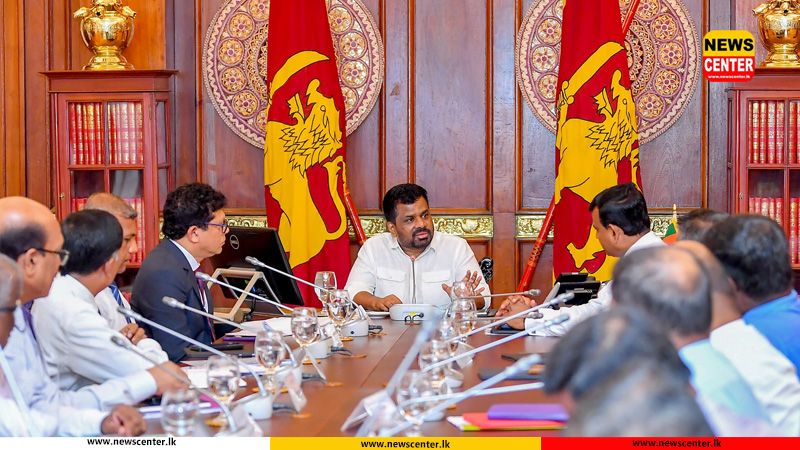
A meeting of the Special Cabinet Sub-Committee and Officials’ Committee appointed to address the impacts of the El Niño climate phenomenon was held this morning (21) at the Presidential Secretariat, under the patronage of President Anura Kumara Dissanayake.
The President reviewed the challenges arising from the current El Niño conditions, the progress of measures taken to address them and arrangements to ensure adequate water supplies for drinking and other domestic needs, as well as for agricultural activities, the President’s Media Division (PMD) said.
Officials of the Ministry of Agriculture noted that crop losses had remained relatively low during the previous Yala season due to advance preparations and timely cultivation. It was also noted that measures had been taken to meet the drinking water requirements of the public.
According to forecasts issued by the Department of Meteorology, severe dry weather is expected to affect the entire country again during February, March and April next year.
The President therefore reviewed the potential impact on agriculture, plantation industries, freshwater fisheries, water supply and electricity generation, as well as the plans prepared to address these challenges, the PMD stated.
The President emphasized the need to ensure the uninterrupted provision of essential goods and services throughout the period that may be affected by the dry conditions.
He also stressed the importance of implementing programmes to support people affected by the adverse conditions until their livelihoods and economic activities recover and instructed officials to formulate these programmes in coordination with the Disaster Management authorities.
The President also reviewed the current water levels in the major reservoirs, measures to ensure a continuous supply of drinking water, arrangements to provide water for agricultural activities, future cultivation plans and measures being taken to safeguard national food security, the statement said.
The President highlighted the need for a comprehensive database providing accurate information on the proportion of consumers supplied by major reservoirs, minor irrigation schemes and small tanks.
He also stressed the importance of identifying in advance areas most vulnerable to prolonged dry conditions, the PMD stated.
In the event that water restrictions become necessary, he instructed officials not to wait until reservoirs are completely depleted, but to engage with affected communities and establish an orderly and systematic programme in advance.
President Dissanayake further emphasized the need to identify areas where tanks, rivers and streams are likely to dry up completely and to map the associated risks and make preparations accordingly, noting that people living in such areas would require water not only for drinking but also for other essential daily needs.
The possibility of authorizing Divisional Secretaries to arrange the cleaning and rehabilitation of water sources that have become unusable was also discussed, the PMD added.
It was noted that, with the first rains expected in October, preparations are planned to begin by making use of rainwater to prepare agricultural land rather than waiting for water to be released from reservoirs. The President emphasized the need for the Irrigation Department and the Mahaweli Authority to work according to a coordinated plan in this regard.
The President also reviewed arrangements to ensure the availability of seed paddy and fertilizer required for the upcoming Maha season, the statement said.
The potential impact of El Niño conditions on the freshwater fisheries sector and fish production, as well as measures for advance preparedness, were also discussed. The President instructed officials to formulate programmes to support affected fishing communities until their livelihoods are restored.
The meeting also discussed the potential impact on the plantation sector and the measures being prepared to address these challenges, as well as steps that could be taken to ensure adequate water supplies for wildlife in protected areas.
The President further stressed the need to expedite the rehabilitation of irrigation systems so that maximum water storage capacity can be secured during the rainfall expected from October onwards, according to the PMD.
The meeting also discussed plans to maintain a strategically planned reserve of electricity generation capacity above normal requirements to ensure an uninterrupted power supply throughout this year and to address potential energy risks arising from depleted reservoirs during the February - April period next year.


Four years ago, three Sri Lankan migrant workers aboard a fishing boat off South Korea’s western coast spotted two Air...
FeaturedAug 21, 2026
A meeting of the Special Cabinet Sub-Committee and Officials’ Committee appointed to address the impacts of the El Niño climate...
Aug 21, 2026

Deputy Minister of Environment Anton Jayakody announced in Parliament today that a Gazette notification on the provision of tamed elephants...
Aug 21, 2026
The Ministry of Education, Higher Education and Vocational Education has issued Circular No. 31/2026, outlining the school term calendar, public...
Aug 21, 2026

SLPP National Organiser and Member of Parliament Namal Rajapaksa arrived at the Financial Crimes Investigation Division (FCID) this morning (21)....
Aug 21, 2026

Sri Lanka's Parliament observed a one-minute silence today (21) in memory of veteran Sri Lankan singer and musician Visharad Dr....
Aug 21, 2026
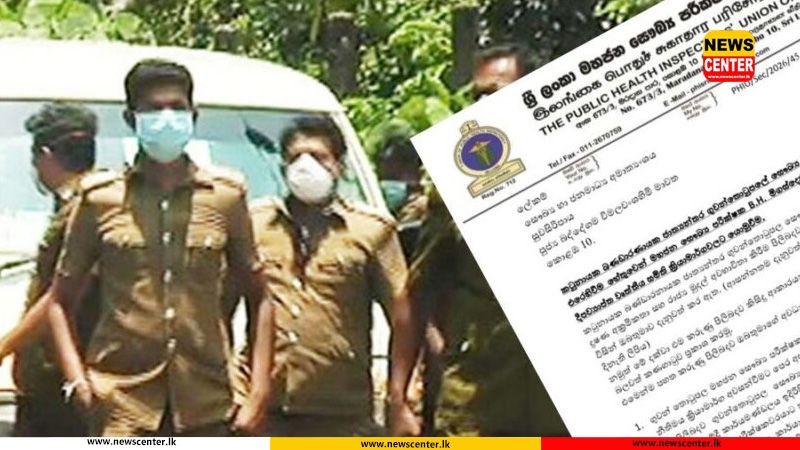
Public Health Inspectors (PHIs) island-wide have decided to engage in a token strike today (21) by reporting sick. The token...
Aug 21, 2026