
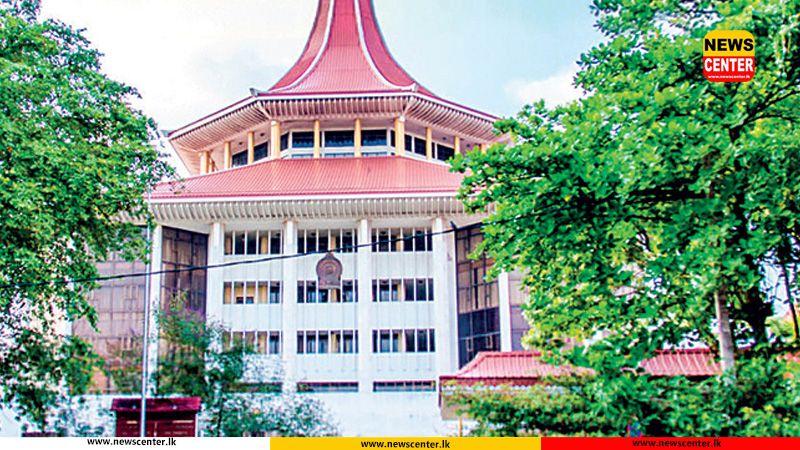
The Supreme Court is scheduled to resume today (02) the hearing of 67 petitions challenging the constitutionality of the proposed 22nd Amendment to the Constitution, following the commencement of proceedings before a five-member bench yesterday.
The petitions were filed after the government presented the Constitution Amendment Bill to Parliament on August 18. Following its publication in the gazette, the public was given an opportunity to challenge the proposed legislation before the Supreme Court.
The 67 Special Determination petitions make the proposed 22nd Amendment one of the most extensively challenged constitutional amendments in Sri Lanka’s recent history.
Five-member Supreme Court bench
The petitions are being heard by a five-member bench comprising Chief Justice Preethi Padman Surasena and Justices Achala Wengappuli, Arjuna Obeyesekere, Sampath Abeykoon and Gihan Kulatunga.
During the first day of proceedings, counsel representing the petitioners requested that the matter be referred to a full bench of the Supreme Court.
The request was made amid concerns that certain provisions of the proposed amendment could have implications for the independence of the judiciary.
However, the Supreme Court rejected the request and proceeded with the hearing before the five-member bench.
The proceedings were later adjourned until today.
Controversy over retirement age of judges
One of the key areas of controversy surrounding the proposed 22nd Amendment is its provisions relating to the retirement age of judges of the superior courts.
The proposed changes have raised concerns among sections of the legal community and other stakeholders, who have questioned whether altering the retirement ages of judges could affect judicial independence.
The government, however, has defended the proposed constitutional amendment and its provisions.
Supreme Court to determine constitutional requirement
The Supreme Court's consideration of the petitions is focused on determining whether any provision of the proposed Constitution Amendment Bill is inconsistent with the existing Constitution.
The Court's determination will be crucial in deciding how the government can proceed with the proposed 22nd Amendment.
If the Court determines that the Bill can be enacted without a referendum, Parliament would be able to proceed with the legislation subject to the required two-thirds majority.
However, if the Court determines that certain provisions require approval by the people, a referendum would also be necessary in addition to the parliamentary majority.
Supreme Court decision to be communicated to Parliament
The Supreme Court is expected to continue hearing submissions from the petitioners and other parties today.
Once the proceedings are concluded, the Court's determination will be communicated to the Speaker of Parliament.
The Supreme Court's decision is expected to have significant implications for the government's efforts to proceed with the proposed 22nd Amendment and will determine the constitutional process that must be followed before the legislation can become law.


Lecturers at state universities will stage protests during the lunch break today, demanding solutions to long-standing issues affecting the university...
Sep 2, 2026
The Supreme Court is scheduled to resume today (02) the hearing of 67 petitions challenging the constitutionality of the proposed...
Sep 2, 2026
Veteran Sri Lankan singer Priyankara Perera has passed away at the age of 64. Perera passed away last night (September...
FeaturedSep 2, 2026

Connecting Sri Lanka to the rest of the world, the national carrier, SriLankan Airlines, is celebrating its 47th anniversary today,...
Sep 1, 2026

A foreign-made hand grenade has been found in the Delgaha Ara Canal, which flows behind the residence of Samagi Jana...
Sep 1, 2026

Sri Lanka Customs has seized more than 200,000 Chinese-made cigarettes concealed inside metal doors imported from China. The detection was...
Sep 1, 2026

The Cabinet has approved a proposal for Sri Lanka and China to enter into a bilateral Memorandum of Understanding on...
Sep 1, 2026